

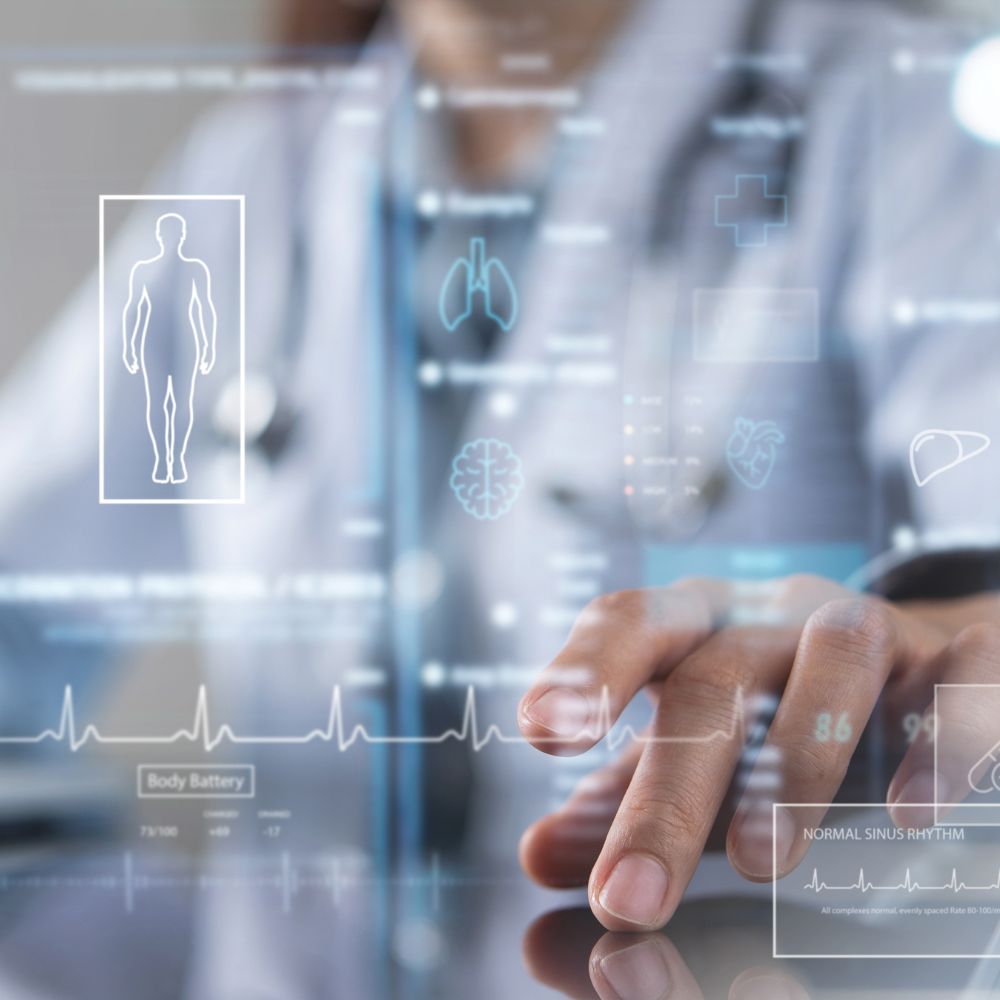
Electronic Health Records (EHRs) represent a significant advancement in healthcare, providing many benefits to both medical providers and patients, such as: facilitating access to patients’ medical information, improving the quality and efficiency of medical care, and engaging patients in their own care.
Electronic Health Record Components
An EHR is an individual’s medical record in digital format, that may include the following information:
- Personal Information: The patient’s name, age, gender, and address, etc.
- Medical History: Previous medical conditions, chronic diseases, prior surgeries, allergies, blood type, height, weight, and body mass index (BMI).
- Medications and Supplements: A complete list of medications, along with their dosages and start dates.
- Lab Test Results: Results from tests such as blood tests and urinalysis.
- Medical Images: Including X-rays, CT scans, and MRIs.
- Vaccinations: And their administration dates.
- Clinical Notes: From healthcare providers.
- Treatment Plans: Including medical referrals, consultations, medications, and other medical procedures.
EHR systems differ in their features, but they generally serve healthcare providers by storing and retrieving patients’ medical information.
Benefits of Using Electronic Health Records
EHRs offer numerous benefits for both patients and healthcare providers, including:
1- Automating Tasks and Improving Team Productivity
EHRs simplify administrative tasks and improve workflow; it reduces the time spent by providers searching for charts and papers, writing notes, or ordering tests, and therefore, the majority of their time can be dedicated to patient care.
2- Supporting Clinical Decisions and Reducing Medical Errors
Automating tasks and using decision support tools—such as alerts for allergies, drug interactions, and incorrect dosages—helps EHRs ensure more accurate diagnoses and fewer medical errors. Additionally, EHRs can reduce the risk of errors associated with paper records.
3- Providing High-Quality Healthcare
EHRs offer doctors and healthcare providers quick and easy access to a patient’s medical information, helping them make well-informed treatment decisions. This includes identifying incompatible medications and drug interactions, determining medical conditions that require further examination or treatment, and ordering necessary lab tests, ultimately leading to more efficient care.
4- Improving Communication Among Medical Staff
EHRs enable secure sharing of patients’ health information among authorized healthcare providers. This enhances effective communication and collaboration between authorized healthcare providers, thus improving coordination, reducing test duplication, and ensuring comprehensive patient care.
5- Reducing Healthcare Costs
EHRs can help reduce healthcare costs by lowering administrative expenses, minimizing medical errors, reducing test duplication, and improving coordination between healthcare providers.
6- Engaging Patients in Their Care
EHRs allow patients to view their medical records and track test results through online patient portals, enabling them to review and better understand their health conditions.
7- Other Benefits
Apart from the advantages listed above, EHRs may also help in:
- Advancing Research and Innovation: EHR data can be used to conduct research on diseases and treatments, helping develop new therapies and improve patient outcomes.
- Enhancing Public Health: EHR data can help in tracking public health trends and spotting areas where improvements are needed.
The more EHR technology advances, the greater the potential benefits for patients, healthcare providers, and the entire healthcare system.
The Future of Electronic Health Records
As technology evolves at a rapid pace EHRs will become an even more integral part of healthcare in the future. Some of the exciting expected developments include:
- Artificial Intelligence (AI): AI could be used to analyze EHR data, identify patterns, predict health risks, and provide treatment recommendations.
- Wearable Technology: Data from wearable devices, such as fitness trackers, could be integrated into EHRs to provide a broader view of a patient’s health.
Conclusion
Electronic Health Records represent a radical change in healthcare and offer huge benefits to both patients and healthcare providers. Many enhancements are expected with ongoing development and the integration of AI.
Be a part of nupco, a leader in innovative solutions, to improve workflow efficiency and deliver high-quality healthcare.